The four immeasurables are: loving kindness, compassion, joy, and equanimity. These are qualities we aspire to in buddhist practice and people appreciate them generally. I think this is because they are part of being human. They emerge naturally with a long standing and committed meditation practice since they are the inherent qualities of awakening.
Some people use the cultivation of them to direct themselves toward awakening. This ‘fake it till you make it’ has never been my style personally because all I could focus on is what is actually true and genuine and trusting that practice could reveal that. I didn’t want to add anything that might be false or artificial or untrue. After practicing for many years now I can finally feel into them and explore them without feeling phoney.
Here we go from St Francis of Assisi’s Prayer for Peace, to the Zen Koan “I have already become like this”1. From there we accompany “Seven Wise Women in the Charnel Grounds”2 and then see what thirteenth century Zen priest Eihei Dōgen has to say about “Birth and Death” in his fascicle of that name.3
1 Susan Murphy’s take on Case 41 of Transmission of Light from her book Red Thread Zen
2 Case 9 from The Hidden Lamp collection edited by Florence Caplow and Susan Moon
3 “Birth and Death (Shōji)” translated by Arnold Kotler and Kazuaki Tanahashi from Moon in a Dew Drop edited by Kazuaki Tanahashi.
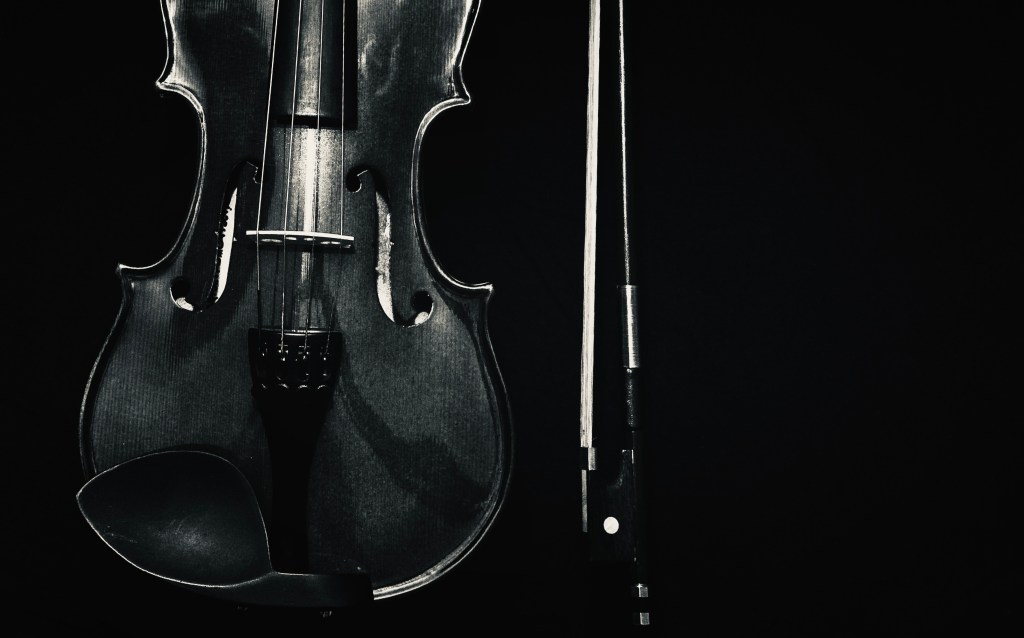
He liked its darker tones,
and that it filled in the in-betweens;
recalling notes left behind,
seemingly forgotten,
by the other instruments;
tracing the empty spaces
with its subtler sounds;
the ones people in the audience don't notice;
their minds drawn
to the attention-seeking utterances of the violins
or the moaning complaints of the cellos;
but without which, riches would be lost

But, all the string instruments,
responding with tenderness and mirth
to the touch of human hands.

The show stopper, of course, the violin;
crying out in despair;
pitching grief one moment
but flighty and mercurial;
quick to laughter;
and able to move
with the impressive speed
and eloquence of a sprinter,
wearing flashy fluorescent spikes.
The centre of attention;
the life of the party.

The cello, the big-hearted and mournful one;
capturing our depths,
resonating the deepest cries and yearning
of the human heart;
full of power and unable to contain its desire;
the middle distance runner,
strong and intensely physical;
strategic; sweatily aggressive.

The double bass, connected to the earth;
trustworthy and even tempered;
the gentle giant; ancient and wise beast;
soothing with sounds felt rather than heard;
the very expression of commitment, of love.
Determined, softly pliant, ultra-marathon runner;
expressing timelessness;
and never giving up or giving in.

The viola player plays in the in-betweens,
and doesn't ask to be loved.
This Zen meditation guides you in and takes you tripping along, riding on the breath, through some old Zen stories. Where will you go?
The first is a re-telling of “A Parable” from Zen Flesh, Zen Bones by Paul Reps and Nyogen Senzaki. This story sets up a persuasive set of circumstances which leads someone (and that someone is us) to discover the completeness of the simple act of enjoying eating a strawberry.
Two koans are featured, both are from The Gateless Gate by Koun Yamada (adapted below).
Case 30 “Mind is Buddha”
Taibai asked Baso in all ernestness, “What is Buddha?” Baso answered, “The very mind is Buddha.”
      VERSE
      The blue sky, the bright day.
      It is most detestable to hunt around;
      If, furthermore, you ask, "What is Buddha?"
      It is like shouting your innocence while holding the loot.
Case 36 “Meeting a Person Who Has Accomplished the Way”.
Goso said, “If you meet a person on the path who has accomplished the Way, do not greet them with words or silence. Tell me, how will you greet them?”
      VERSE
      Meeting on the path a person who has accomplished the Way,
      Do not greet them with words or silence.
      It is right in your face;
      If you want to realise, realise on the spot.
She’d been through a lot this girl, only 13 years old. So she needed chocolate biscuits, lots of them.
And dad, in prison for domestic violence. the daughter missed her father and knew he just got upset sometimes and couldn’t control his temper.
Surely, the chocolate biscuits will help, thought mum. She’d had a lot of wounds and hurts and that meant a lot of chocolate biscuits were needed.
So she had chocolate biscuits for lunch, at school, every day.
The teachers were concerned. But mum knew best, and thought, and hoped, that the chocolate biscuits would cover up all the times she’d let her daughter down.
But they always melted in the girl’s lunchbox and made her queasy.
Our dog was forever barking. We’d tried everything, but to no avail.
One day he heard the words of the Buddha —
“Life is suffering.”
He thought to himself, Oh, that must be why I’m forever barking — I’m suffering!
The humans in his life would often say to him “who’s a clever boy?” He had no idea and wondered why they were asking. But seeing himself acquire this understanding of Buddhism, he thought to himself, I must be the clever boy! I must be a real thinker.
So, when he heard the famous words of Descartes, the Cogito,
“I think therefore I am,”
he saw that this must mean “I am.”
This really blew his socks off. It led to his discovery of the work of Indian guru Sri Nisargadatta Maharaj, and his book, I am that. He wasn’t sure exactly what ‘that’ was, but didn’t let it bother him.
He appeared to be a genuine seeker making real progress on the spiritual path. So a spiritual teacher offered to give him shaktipat, the direct transmission of divine energy leading to spiritual enlightenment.
The teacher called him over, “come here boy,” and touched our dog’s third eye. He wagged his tail, barked happily, and trotted off.
The teacher commented,
“There’s not much going on in there, is there.”
“Probably not,” we replied.
Undeterred, our dog continued his study of Nisargadatta. He particularly liked the quote, though he hadn’t a clue what it meant —
“Love says: ‘I am everything’.
Wisdom says: ‘I am nothing’.
Between the two my life flows.”
Finally, our dog discovered the Tao Te Ching. He found he couldn’t put it down. He carried it everywhere between his teeth.
One day, he read —
“He who knows, does not speak. He who speaks, does not know.”
I don’t know if he got enlightened but he never barked again after that.
Someone told me once to ‘get on my bike.’ That’s when it occurred to me that I didn’t own one. So I went and bought one—no wait, actually two—bikes. A pretty blue mountain bike and a helpfully self-propelling one with a motor, a motorbike.
The three of us fell deeply in love.
The motorbike had the soul of a dirt bike, having been one in a previous lifetime. So it was attracted to dirt and gravel roads, and to mud. That was after a lifetime spent as a pink tricycle, with streamers hanging from the handlebars and ridden by a little girl in a pink dress with determined eyes, who would turn out to be me.
The mountain bike was afraid of mountains, and heights in general, and preferred city streets. This was after meeting its end in its previous lifetime as a cigarette butt, flicked, spinning end-over-end, from a mountain-top sight-seeing lookout. Thus the dying of the light and the extinguishment of that particular lifetime. And of course its strong preference for the big smoke merely an inveterate habit of the many short lifetimes it had spent as a cigarette.
Both bikes had done stints in previous lives as ten-speed racing bikes; as car wheels; and as various kinds of tyres. The motorbike was once a ferris wheel; the mountain bike a monocycle, and before that, a monocle. They both served me in a previous life-time, forming the pair in a set of regular spectacles.
Going back a way, all three of us had once worked together on a steam train: I was the driver and those two worked side-by-side as wheels. And going back before the time of people and before memory itself, the three of us were nearby pebbles, beautifully smooth and rounded, in a stream, sometimes rolling together in the current. Then I decided to reincarnate as an eel-like creature in the late Cambrian period, whilst they remained in orbiculate occupations.
Together again now, our wheels once again turn together.







 wannabepoet : zen perspectives